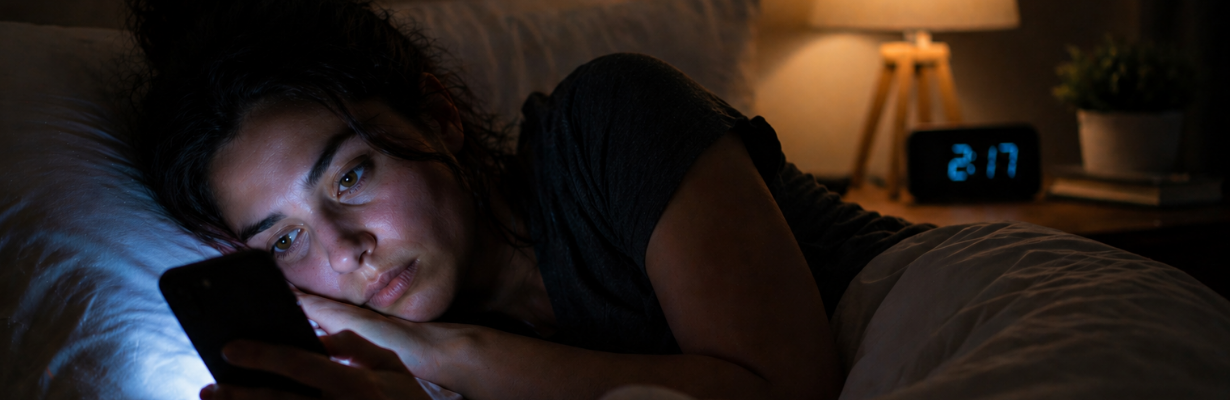

At 2:17 a.m., the glow of a phone lights up a dark bedroom somewhere in the United States.
A young professional scrolls through emails she forgot to send earlier. A college student lies awake replaying a conversation from the day. A father wakes briefly, checks the clock, and calculates how many hours remain before his alarm rings.
Across the country, millions of similar moments unfold every night.
Sleep used to be a simple biological rhythm of night fell; bodies rested, and morning arrived with renewed energy. Today, sleep has become something many Americans struggle to achieve consistently. For a growing number of people, it is no longer automatic but negotiated between stress, screens, deadlines, and restless thoughts. The result is a national pattern that health experts increasingly describe as a public health issue.
Roughly one in three adults in the United States does not get enough sleep, and between 50 and 70 million Americans live with some form of sleep disorder. (HelpGuide.org) This widespread exhaustion affects far more than mood or productivity. It shapes mental health, physical health, relationships, and even economic stability. Sleep, it turns out, may be one of the most underestimated pillars of human well-being.
For most healthy adults, scientists recommend seven to nine hours of sleep each night. (HelpGuide.org) Yet the average American sleeps less than that. Surveys consistently show that over 30% of U.S. adults experience insufficient sleep, and millions regularly function on six hours or less. (Sci-Tech Today) This might seem like a small difference just an hour or two less each night. But the human brain does not interpret sleep loss as a minor.
Imagine sleep as a nightly maintenance shift for the body. During those hours, the brain clears metabolic waste, consolidates memories, balances hormones, and regulates emotional responses. When sleep is shortened, the maintenance crew leaves early, and unfinished work accumulates.
Night after night, the body carries that unfinished work forward.
Over time, the consequences become visible.
Prolonged sleep deprivation has been linked to increased risk of:
These connections are well documented across medical research and public health data. (CDC) Yet despite this knowledge, sleep deprivation remains remarkably common.
Why? Because modern life quietly competes with sleep in ways previous generations never experienced.
A century ago, the average person slept roughly nine hours a night. Today, global sleep averages have dropped to around 6.8 hours per night. (SingleCare) In the United States, several cultural shifts contribute to this change.
Phones, laptops, and streaming services have effectively erased the natural boundary between day and night. Instead of darkness signaling rest, evenings now offer endless stimulation. Notifications buzz. Emails arrive late. Social media refreshes continuously. Even when devices are not actively used, the psychological expectation of constant availability keeps many minds alert long after the body needs to rest.
Remote work and digital connectivity have blurred the boundaries of the traditional workday. For many professionals, the workday does not end at 5 p.m. anymore. It simply becomes quieter. Late-night productivity has become normalized in many industries, especially among younger professionals trying to stay competitive.
Nearly half of Americans report frequent stress, and rising stress levels are closely connected to sleep problems. (MELO Labs, Inc.) Stress activates the body’s threat-response system, elevating cortisol, increasing alertness, and making relaxation difficult. In evolutionary terms, this response made sense when threats were immediate and physical. But modern stress often comes from psychological sources: financial worries, job uncertainty, social comparison, or digital overload. The brain reacts to these pressures as if danger were present, even when the body is safe in bed.
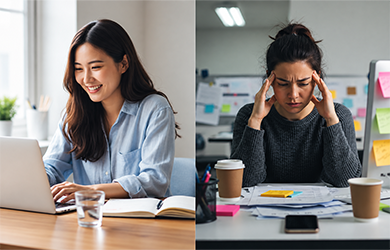
One of the most fascinating aspects of sleep is how closely it interacts with mental health. Sleep does not simply influence mood. Mood also influences sleep. The relationship moves in both directions. When someone sleeps poorly, emotional regulation becomes harder the next day. Small frustrations feel bigger. Concentration becomes difficult. Patience wears thin. But when someone feels anxious or overwhelmed, falling asleep becomes harder that night. It becomes a feedback loop.
Researchers studying sleep patterns across the United States have found strong links between insufficient sleep and symptoms of anxiety and depression. (CDC) One reason involves the brain’s emotional center, the amygdala. Sleep deprivation makes the amygdala more reactive, meaning emotional responses become stronger and harder to regulate.
At the same time, the brain’s prefrontal cortex, the region responsible for decision-making and rational thinking, becomes less effective. The result is a brain that feels more and thinks less. Anyone who has tried to solve a complicated problem while exhausted understands this instinctively.
Adults are not the only ones affected. American teenagers may be experiencing the most dramatic sleep decline of all.
Research shows that a large majority of U.S. high school students do not get enough sleep, and the number sleeping extremely short hours continues to rise. (People.com) Biologically, adolescents naturally fall asleep later than children or adults. Their circadian rhythms shift during puberty. But school schedules rarely adjust to this biological reality. Many high schools begin before 8 a.m., forcing teenagers to wake up when their bodies still expect sleep. Combine that with evening screen time, social media use, and academic pressure, and the result is widespread sleep deprivation among young people.
The effects appear in classrooms every day:
Some public health experts argue that improving teen sleep may be one of the simplest ways to improve student well-being nationwide.
Sleep deprivation is often framed as a personal health issue. But its consequences extend far beyond individual well-being.
Insufficient sleep costs the U.S. economy hundreds of billions of dollars annually through lost productivity, workplace errors, and healthcare expenses. (Sci-Tech Today)
Fatigue affects:
In industries where safety is critical transportation, healthcare, manufacturing sleep deprivation can have serious consequences. Studies estimate that about 20% of car crashes involve drowsy driving. (Sci-Tech Today) Similarly, fatigue contributes to medical errors, workplace accidents, and decreased performance. Sleep is not simply a personal habit. It is an invisible infrastructure supporting society’s functioning.
Not everyone experiences sleep challenges in the same way. Socioeconomic factors also influence sleep patterns. Research suggests that individuals facing financial insecurity, shift work schedules, or crowded living conditions often experience shorter sleep duration and poorer sleep quality. (Springer)
Night shift workers, for example, must remain alert during hours when the human body naturally expects rest. Even with careful scheduling, the body’s circadian rhythm rarely adapts completely. Parents of young children experience another form of sleep disruption fragmented sleep.
While the total hours might appear adequate on paper, frequent awakenings prevent the deep sleep cycles necessary for restoration. Sleep inequality, therefore, becomes part of broader social inequality. Those already under stress often have the hardest time getting restorative rest.
If someone traveled forward in time from the 1980s and observed a modern bedroom, one detail would stand out immediately:
The room glows.
Televisions, laptops, smartphones, smartwatches, and ambient lighting create a constant artificial brightness. This matters because the brain relies heavily on light signals to regulate circadian rhythms. Exposure to bright light, especially blue light emitted from digital screens, signals the brain to stay awake. As a result, late-night screen use can delay the body’s natural release of melatonin, the hormone that helps initiate sleep.
Research involving thousands of American children and adolescents has also found connections between excessive screen time, shorter sleep duration, and increased risks of anxiety and depression. (arXiv) The technology designed to connect people may inadvertently interfere with one of the body’s most essential biological cycles.
Sleep deprivation rarely appears dramatic. It often shows up quietly. A person becomes slightly more irritable than usual. Motivation dips. Concentration slips. Decisions take longer. Over weeks or months, the effects accumulate like slow erosion. Many people adapt to chronic fatigue without realizing how deeply it affects them. They assume constant tiredness is normal. But when individuals finally recover adequate sleep perhaps during vacation or after improving sleep habits, the difference can feel startling.
Clarity returns.
Patience increases.
Creativity reappears.
The brain, once rested, begins functioning at its intended capacity again.
For decades, American culture celebrated productivity above all else. Long work hours were often worn as a badge of honor. Sleeping less became a symbol of ambition. But research increasingly suggests that sacrificing sleep for productivity may actually undermine performance. A well-rested brain learns faster, remembers more effectively, and solves problems with greater creativity. In other words, sleep is not a waste of time. It is preparation. Athletes understand this principle well. Elite sports teams invest heavily in sleep science because recovery determines performance. Yet outside athletics, many people still treat sleep as optional. Changing this mindset may be one of the most important cultural shifts for public health.
Improving sleep does not require perfection. Often, small environmental and behavioral adjustments can create significant changes. Health researchers commonly recommend several evidence-based strategies:
Going to bed and waking up at the same time daily helps regulate the body’s internal clock.
Dimming lights and limiting screen use before bedtime helps signal the brain that night has arrived.
Cool temperatures, quiet surroundings, and comfortable bedding improve sleep quality.
Caffeine and nicotine can interfere with the body’s ability to relax.
Sleep should be treated as essential maintenance, not leftover time at the end of the day.
These practices may sound simple, but they address the biological systems that control sleep. Consistency allows the body to relearn rhythms that modern life often disrupts.
Sleep is deeply personal, yet it is also a societal issue. School schedules, work culture, technology design, and urban environments all influence how people sleep. When a third of a nation feels chronically tired, the problem extends beyond individual habits. It has become a collective challenge. Public health experts increasingly advocate for policies that support healthier sleep patterns, including:
Small structural changes can have significant ripple effects across communities.
The modern world will not suddenly become slower. Technology will continue advancing. Work demands will evolve. Digital connectivity will remain part of daily life. But awareness about sleep is growing. More physicians now screen patients for sleep disorders. Workplace wellness programs increasingly emphasize sleep health. Wearable devices help people monitor sleep patterns and recognize disruptions. Perhaps most importantly, conversations about mental health and well-being have become more open.
Sleep sits at the intersection of both. Understanding sleep may be one of the simplest ways to understand ourselves. Because when people sleep well, many other aspects of life quietly improve.
Mood stabilizes.
Relationships feel easier.
Decisions become clearer.
Energy returns.
The body remembers how to restore itself.
At the end of the day, every person returns to the same biological need.
Night arrives.
The world grows quieter.
The body asks for rest.
In a culture that often values constant activity, sleep remains one of the few moments when productivity pauses and recovery begins. It is not a luxury. It is one of the oldest forms of healing the human body knows. And perhaps the simplest reminder that, despite the complexity of modern life, the rhythms of the human body remain beautifully unchanged. The same act that our predecessors accomplished thousands of years ago is still necessary.
Darkness.
Stillness.
And enough time to sleep.