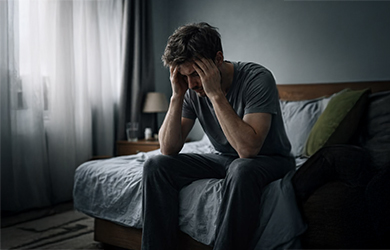

Some types of tiredness are not evident in a performance evaluation. Never fails to meet deadlines. Does not offer to help when they are struggling. It arrives on time, replies to all e-mails, even gives a smile to the guy in the stand-up phone call, and then returns home, gazing at the wall for an hour before even considering dinner. This is often an early sign of quiet burnout, workplace stress, and employee mental health challenges.
After having seen this trend so frequently as a clinical psychologist, I have given it a name – quiet burnout. Not the dramatic break down! Not the resignation letter! The gradual and unnoticed wear and tear of a person's guts while his/her outward act remains ever pristine. This form of emotional exhaustion often develops silently despite high performance.
But in 2026, this is no longer a peripheral issue that is discussed in doctors' offices, in therapy sessions and on the sidelines. It is slowly evolving into the biggest threat in the otherwise "high functioning" working environment, affecting workplace mental health, employee wellbeing, and organizational productivity.
What we've discussed about Burnout for years is a loud Burnout and not a Quiet Burnout. The World Health Organization's classic burnout is an occupational phenomenon that is caused by chronic stress in the workplace that has not been managed successfully, and it often has an impact on people. Missed deadlines. Visible irritability. The drop in production which a manager can point to on the dashboard. This type of workplace burnout is easier to recognize.
Quiet burnout hides. They have termed it "slow, undetected exhaustion," and say that the individual keeps on going and going while outwardly being fine — his or her reserves are going down but quietly. Clinically it is the difference between working and prospering. In terms of the health of the individual, they are "okay." They are on a mission and working things out. But, under the surface, there is a chronic nervous system dysregulation, they feel like they are operating without a break, and they feel like they are becoming more and more distant from themselves, leading to mental fatigue and emotional burnout.
Hence, it is quite hazardous. If you can't see it you can't flag it. In most organisational cultures – even the most caring and compassionate – competency is a measure of wellbeing. In the case of delivery, we take him/her for granted. Quiet burnout flourishes in that no man's land, silently impacting employee wellbeing and mental wellness.
There are a number of factors that have all coalesced this year that have elevated quiet burnout from an individual issue to a problem in the workplace.
The latest staffing information indicates high levels of burnout and more than half of workers are experiencing it to some degree, all of which are at a multi-year high. It's the individuals who are burning out that have changed. It's become the trustworthy, middle-of-the-road professional – the one who has taken on more and more without raising too many complaints, the one who's worked hard to adapt to all the changes, restructuring and job cuts and worked "more with less" over the years. Others now refer to this as the 'silent middle' problem—individuals who were supposed to lead the way to change, achieve their goals, and help younger colleagues and yet not appear to be suffering at all. This growing pressure is increasing employee burnout, workplace stress, and occupational stress.
Numerous companies have rolled out AI products claiming that they will help reduce the workload. The reality of workers using AI is that they are reporting significantly higher level of burnout than those who do not use AI. The tools have shaved the time needed to perform tasks and raised expectations of output at a faster rate than effort has been removed, thus increasing the cognitive load, mental fatigue, workplace stress, and emotional exhaustion, although the "visible" effort per task might appear to have decreased.
Many employees say that they now work outside their set hours more often and remote and hybrid workers now experience even higher rates of burnout than those who work in the office — not because remote work is the problem, but because this type of arrangement eliminates the physical cues (e.g. closing the office door, the commute) that once signalled "the workday is over." Those cues provide the nervous system little real off switch without which it is difficult to shut down, affecting work-life balance, employee wellbeing, and mental health at work.
Job insecurity, restructuring and a constant flow of uncertainty in the world are not different stressors in the work place, but are the low frequency hum beneath it. Psychologically, this can be said to be a "supercycle" of mixed pressures: The economy is unstable, technology is quickly overtaking them, and society is becoming more tense, and the boiling pot is bubbling willy-nilly, with no end in sight. These ongoing challenges contribute to chronic stress, workplace anxiety, employee stress, and quiet burnout.
Clinically, if stress is unrecognized, chronic and it does not confine itself to "productivity". It manifests itself in disrupted sleep, in no longer being able to tolerate loved ones; in desensitizing to things that once brought us joy; and with time, in a complete loss of identity. Individuals cease to identify themselves other than as workers. Individuals lose their sense of self beyond their work role, affecting their mental wellbeing, emotional health, and overall quality of life.
On an organizational level, costs can be just as tangible, but may not be as obvious in a quarterly report. Burnout is thought to cost the world economy trillions of dollars every year from disengagement due to burnout. The gender disparity in reported burnout has increased especially among women who hold leadership positions, with caregiving being a largely invisible burden that is added to these leaders' professional duties. Burnout that's not addressed gets loud sooner or later, it's in ways that will catch management off-guard, just because it "appeared fine." This has a direct impact on employee engagement, workplace productivity, employee retention, and organizational health.
The latter is of clinical significance. A talk about burnout is not a common occurrence. It generally concludes with an exit — one that is sudden, final and is only explained often in an exit interview (if ever). This is why burnout prevention and workplace mental health awareness are becoming increasingly important.
As a psychologist, I'm not going to sugarcoat this: I don't think it's a problem if a quiet smoldering employee is just supposed to meditate more or take a bubble bath. No one is at fault when they are in quiet burnout. It's an ongoing mis-match, a mismatch that is not sustainable by a nervous system — it's often exacerbated by a culture in the workplace where naming struggle is seen as unprofessional or unsafe. Supporting employee mental health and psychological wellbeing requires more than individual self-care.
The things that do work personally and organizationally can be broken down into three categories:
Language is needed before action can take place, in order for people to "do something" about what they are experiencing. Using the term quiet burnout – acknowledging that it is different from being busy – is often the first step a person can take to take the problem of exhaustion seriously and not dismiss it as "just being busy." This improves burnout awareness and mental health awareness.
That means that there are real limits on after-hours availability and workloads that are periodically re-evaluated, not just as they keep growing, but as managers become more attuned to the signals that aren't so obvious — the intonation in one's voice, the absence of joining in with optional interactions, the lack of enthusiasm. These practices promote healthy workplaces, work-life balance, and employee wellbeing.
Not like a poster stuck on the break room wall but as a reality in which there is no place in which disclosure does not come with no loss of reputation or promotion. In an organization with a true culture of psychological safety, workplace mental health, and employee wellbeing, the average rate of burnout and disengagement is significantly reduced as compared to a paper-thin culture of mental health.
Quiet burnout is, in some ways, the most human threat a workplace can endure: It's created entirely out of good employees making an effort to keep it afloat. All the things we're drawn to are the things this kind of fatigue can go undetected for months or years. It's the very traits we look for that are the ones that enable this type of fatigue to pass unrecognized. This silent form of employee burnout and emotional exhaustion deserves far greater attention.
If 2026 is the year this risk becomes a priority, it will take some effort to change the cultures within the workplace so that healthy workplaces, workplace wellbeing, employee mental health, psychological safety, and burnout prevention are not defined as a place where people are not allowed to admit they are tired.